So unpredictable
My last post was so upbeat. I’m not exactly unhappy today, but maybe lightly frustrated?
I have a meeting with a kindly woman from Gorman Heritage Farm on Friday who is interested in growing willow and eventually weaving with it. I have been having lots of fictional conversations with her in my car during which I try out different things I could say to her about willow, how to grow it, why it’s joyful, what the pitfalls are and so on. But I’ll be honest, those one-sided talks have veered toward the negative.
In the barns, when things are hard or a horse does something annoying or slightly dangerous for themselves or us, or we get stuck doing 3 days of completely boring work that’s necessary to keeping horses fed and healthy, the joke is, we say “Why Horses?!?” They’re a lot of work. They’re pieces of work.
But I’ve been feeling that lately about willow too.
Here are some reasons why:
Green Edna. That’s a variety of willow I purchased from Lakeshore Willows out of Canada. They billed it as one of their favorite weaving willows, but mostly what got me was the name. My grandmother‘s name is Edna. She was a wonderful woman and I wish she was still around to share this willow journey with. She would definitely think it was neat. And so I have to have this willow in my beds.
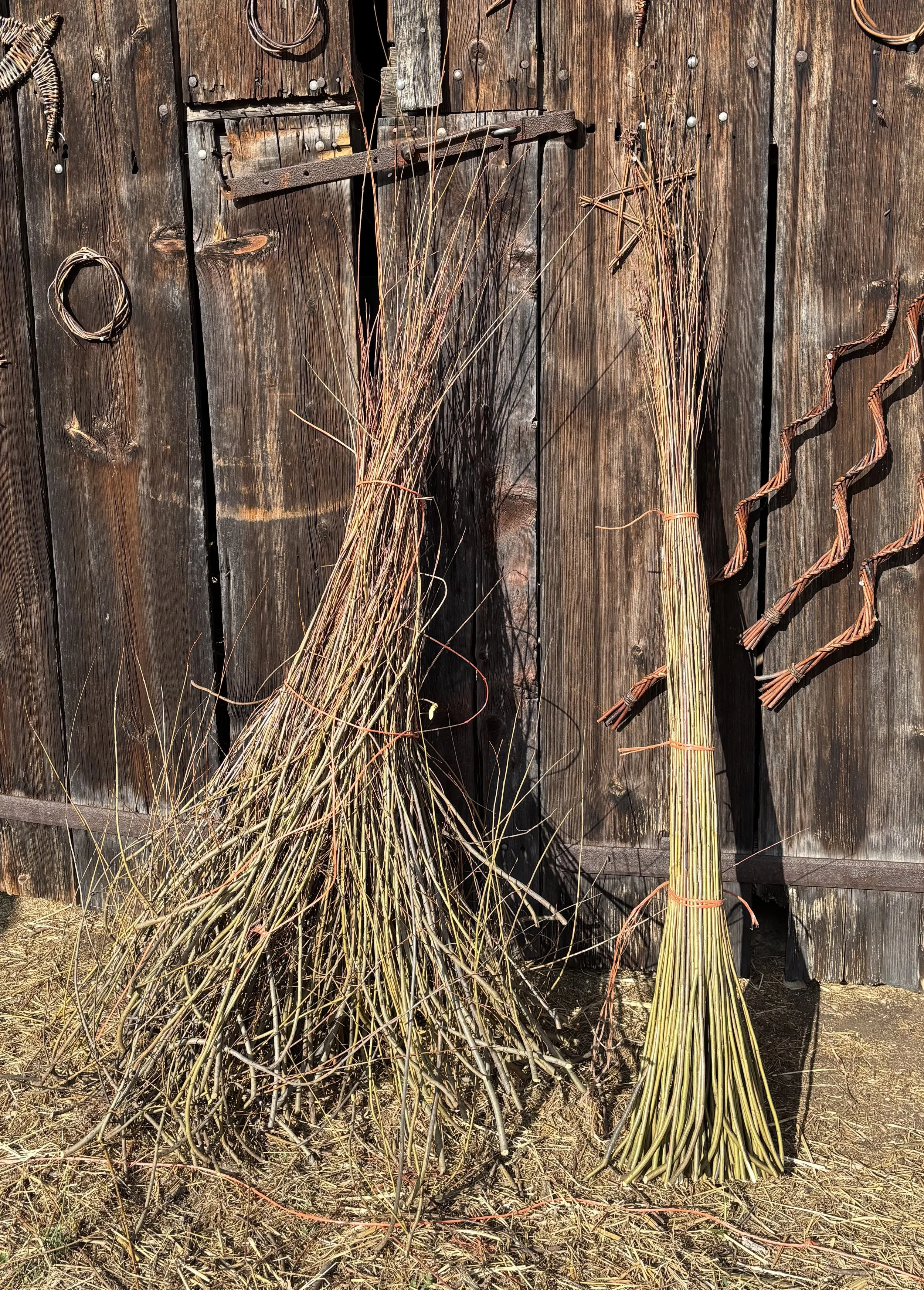
The first bed I planted it in collapsed due to blight in its second year. Nearly every willow planted there died. I’ve since figured out how to handle blight, but I couldn’t dismiss Green Edna simply as a willow unsuitable to grow on the farm. I had to try again. But Green Edna apparently grows crazy for 2-3 years—no straight rods, incredibly branchy, straggling across the ground more like squash vines than basket willow. Once mature, however, it suddenly grows straight, very slender, beautiful rods, pale green at the base fading into a reddish green at the tips.
I’m on willow harvest number five and only now, half a decade in, did I finally get to harvest mature beautiful Green Edna. And there’s not enough of it considering how long I’ve had to wait get some.
Here’s a picture of mature Green Edna on the right and the hot mess it is on the left before its plant has matured.
Ridiculous. And I am not a spring chicken. I’m 52. I don’t have all the time in the world. I have Green Edna planted in a few different locations on the farm, but it may be 2-3 years before they produce rods I can weave with. And god forbid, bugs or blight get them. Then I have to start over with that variety.
I’ll be sixty before I can make more than 2-3 baskets from Green Edna. Cue the eye rolling.
Planting Willow for Color or Size
A woman I am social media friends with has announced that she would like to put together a booklet of willow varieties being grown in the US with details about each—about how they grow, their growing color, their dried color, and their reconstituted color. I cannot put into words how much I would love such a resource or how thrilled I would be to help provide information to her.
But besides Green Edna growing like trash for a few years before getting good, few of my willows have actually grown true to promise of their variety as described by other growers. Green Dicks were meant to be slender mid-sized weavers. In their first year, mine grew chunky and nine feet tall. Irish Red is supposed to grow big and chunky and be great for living willow projects. So far, mine are gnarly, branchy, short chunky willows good for nothing but making more cuttings for planting—but why would I plant more?
I plant willow on the east end of the farm in old abandoned market garden beds. They would need amendments to successfully produce vegetables, but are likely richer and more fertile than they need to be for growing willow. I plant willow on the west end of the farm too in fair to middlin soil on a swale at the top edge of a gravel pit we’re reclaiming. The same variety planted on one end thrives and gets oversized and on the other grows wee and sad—often in very different colors.
And I know you’re thinking, “Well, duh, Amy. Of course a plant grows and thrives in fertile soil and is smaller and sadder in rocky unamended soil.” But the jokes on you.
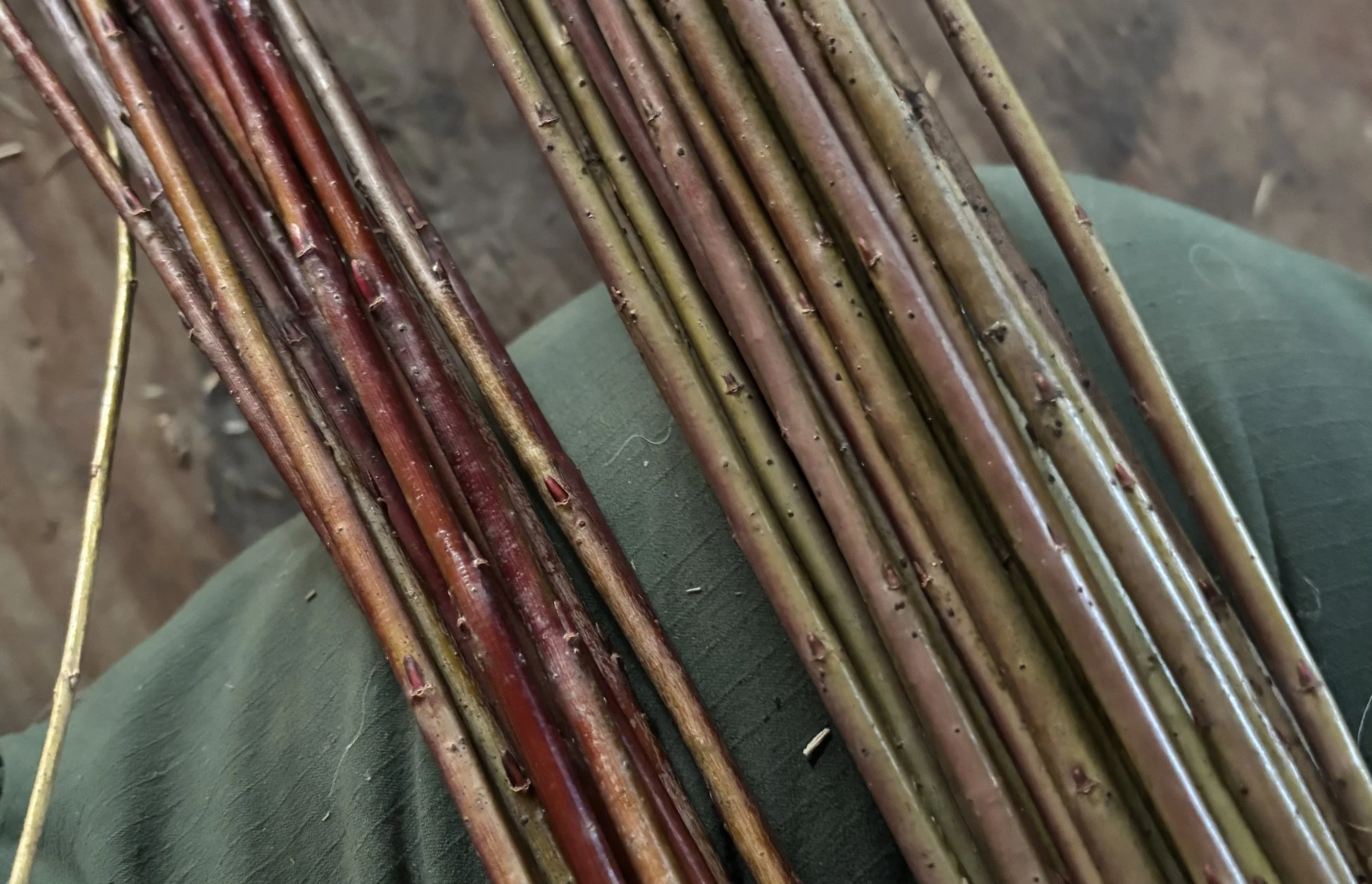
Juane de Falais is sad and truncated in rich soil but grows rods 1.5 inches in diameter and 11 feet tall in rocky dusty soil. Meanwhile Packing Twine grows the same size in both soils, but is pale green with a pink blush at one end of the farm and bright red with a green under tinge on the other end of the farm (Pictured below). Hakuro Nishiki won’t take at all on the east end but is doing its best on the west end.
I literally don’t have time for this. I don’t have time for the science experiment. I need to plant willow that survives and thrives and throws off rods suitable for weaving projects. I don’t want to test soil and baby them. I just want them to produce.
The good news is that plenty of the thousands of willows I have planted are doing well. They are not necessarily doing what the growers who sold them to me described their future growth habits as being, but they are producing weaveable rods. But when I say that growing willow demands a level of patience and resignation that I have had to devote to no other endeavor I have ever undertaken, this is what I mean. It can be years before the starts I have planted start to show their true colors—literally.
So, I’m feeling a way about willow currently. I still love it and feel like it’s my life calling. I still want every farmer or landowner in the States (at minimum, but preferably the world) to grow an acre of willow. I’m just having a slightly harder time finding the persuasive words to convince someone else to jump into this undertaking. Right now, growing willow feels like a “yes, but…” life choice.
This is excellent marketing for my “Learn How to Grow Basket Willow” class in February. Lolz.
Come learn how to farm willow. . . At your own peril.
Wanna grow basket willow? Sucker.
I’m kidding, of course. I love harvesting and grading and weaving. It’s all a joy, just a very unpredictable one. Grow willow. As much as you can. Just don’t expect to be in control or to have meaningful plans that the willows adhere to.
Truth in advertising is important.
